
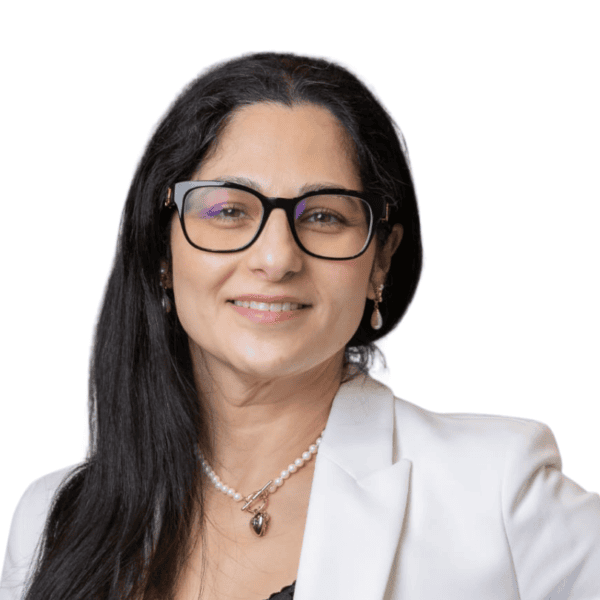
Member Spotlight
University of Chicago
- Chicago, IL
- Member Since 2019
Q/A
As Associate Professor and Pain Fellowship Program Director at the University of Chicago, Dr. Dalia Elmofty combines clinical excellence with academic leadership to advance pain medicine. Her expertise spans anesthesiology, acute and chronic pain management, and neuromodulation, with a strong focus on personalized care and interdisciplinary collaboration. Passionate about improving patient outcomes, Dr. Elmofty works to restore function and dignity while fostering innovation and guiding future specialists in the field.
Her commitment to neuromodulation began during fellowship training and has grown through years of academic practice and active involvement in national pain societies. A NANS member since 2019, Dr. Elmofty contributes to the society’s mission through service on the Education Committee and participation in the SCS Guideline Group, helping shape standards and educational initiatives that elevate patient care and professional practice.
Areas of expertise:
Anesthesiology, Acute and Regional Pain Management, and Chronic Pain Management
Why I enjoy what I do:
I enjoy being a pain physician because the field allows me to combine procedural skill, longitudinal patient relationships, and multidisciplinary problem-solving in a way that few specialties do. Pain medicine challenges me to think beyond algorithms and to tailor care to each patient’s lived experience, whether managing complex perioperative pain, neuromodulation, cancer-related pain, or chronic neurologic conditions. I am particularly drawn to the opportunity to integrate innovation and education into clinical care. Pain medicine also provides a platform to address health disparities, bias, and inequities in care, areas that have become central to my professional identity through teaching, scholarship, and advocacy. Most importantly, I value the privilege of helping patients regain function, dignity, and quality of life while mentoring trainees and collaborating across disciplines to advance the field.
How I became interested in neuromodulation:
I became interested in neuromodulation through a combination of early exposure during training, academic practice, and sustained engagement with national pain societies. During my pain medicine fellowship, I was drawn to complex neuropathic pain conditions that were refractory to conventional medical and interventional therapies. Neuromodulation offered a way to address these challenges by targeting pain pathways directly, while also requiring careful patient selection, longitudinal follow-up, and thoughtful integration into comprehensive care plans. During fellowship, I found myself caring for patients with complex neuropathic and chronic pain conditions who had exhausted more conventional medical and interventional options. Neuromodulation stood out because it required careful thought, patient selection, and long-term follow-up, and because it often provided meaningful improvement for patients who had very few remaining options.
That interest deepened once I joined the University of Chicago. Working with a diverse and medically complex patient population, including patients with cancer-related pain, neurologic disease, and refractory chronic pain, made it clear that neuromodulation could be a powerful tool when used thoughtfully and responsibly. Managing complications, troubleshooting devices, and following patients longitudinally reinforced the importance of understanding both the technology and the patient beyond the procedure itself. My involvement with ASRA Pain Medicine and NANS further shaped my perspective. Through educational programming, abstract review, guideline work, and national meetings, I was able to engage with colleagues who were critically examining how neuromodulation should be taught, studied, and integrated into practice. Those experiences solidified neuromodulation as a core part of my clinical, academic, and educational work, and continue to influence how I teach and mentor trainees today.
The best thing about NANS:
I value my membership in North American Neuromodulation Society because it combines science, practical education, and an engaged professional community in a way that directly supports both patient care and academic growth. Through NANS, I have been able to contribute meaningfully as an abstract reviewer, scientific planning committee member, guideline oversight participant for spinal cord stimulation, and educator, while also learning from leaders who are advancing the field. The society’s emphasis on evidence-based neuromodulation, complication management, appropriate utilization, and mentorship aligns closely with my clinical and academic priorities. NANS also provides a collaborative forum where multidisciplinary perspectives are valued, and emerging technologies are critically evaluated. Most importantly, NANS has allowed me to remain actively involved in shaping how neuromodulation is taught, studied, and responsibly integrated into clinical practice, which is why continued membership and leadership within the society are important to me.
My favorite musician:
Stjepan Hauser and Andrea Bocelli
Words to live by:
“Treat suffering with mercy, not judgment.”