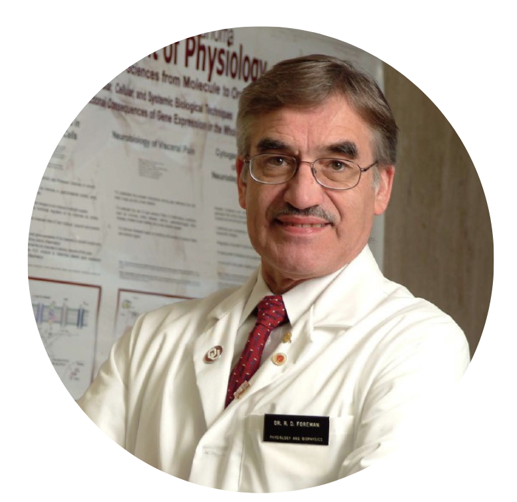
University of Oklahoma Health Sciences Center Oklahoma City, Oklahoma NANS member since 2005 NANS members can find me onLinkedIn and Facebook
Dr. Robert D. Foreman, George Lynn Cross Research Professor Emeritus at the University of Oklahoma Health Sciences Center, is a distinguished figure in the field of neuromodulation. With expertise honed through decades of research, Dr. Foreman has pioneered advancements in understanding the neuro-humoral mechanisms of visceral dysfunction and pain. His work has not only expanded the knowledge base but also translated into effective treatments utilizing neuromodulation for patients suffering from visceral diseases. Passionate about education, Dr. Foreman finds joy in mentoring graduate students and fostering international collaborations in neurocardiology. As a past President of NANS, he has been instrumental in shaping the society's strategic direction and advocating for research funding. Dr. Foreman's vision for the future of neuromodulation encompasses continued innovation and expanded access to therapies, ensuring improved patient care worldwide. Areas of Expertise: My expertise in basic science training provided the foundation to developa research program that was designed is to study the neuro-humoral mechanisms of visceral dysfunction/pain that expanded our knowledge base and translated these findings into adequate treatment with neuromodulation of patients suffering from visceral diseases. My basic science research program also centered around neuromodulation that addressed mechanisms of action underlying conventional and novel spinal stimulation algorithms.
Why I enjoy what I do: I enjoy using basic research to train graduate students, postdoctoral fellows, residents, medical students, visiting research scientists, and high school students and teachers about the interplay between visceral organs and the nervous system, especially focusing on pain. I also enjoyed organizing an International Working Group on Neurocardiology composed of clinicians and basic scientists from Sweden, the Netherlands, Canada and the United States for more than 20 years to conduct basic research related to neuromodulation and cardiovascular sensory function.
How I became interested in neuromodulation: The interest began in the 1970s when I was working as a postdoctoral fellow in the basic science laboratory of Dr. William D. Willis. His research addressed the basic mechanisms of pain associated with the spinothalamic tract. We discussed the questions associated with the novel gate control theory that was beginning to be explored. At that time, it was not known if neuronal processing from dorsal column stimulation reduced pain by activating neurons only at the spinal level or also activating spinal neurons belonging to ascending pathways that might be transmitting pain information. Thus Dr. Willis and our team showed for the first time that neural activity in the ascending spinothalamic tract was reduced during dorsal column stimulations.
The best thing about NANS: I am a member of NANS because it gave me an opportunity to meet with clinicians, basic scientistsand engineers and discuss new ideas that might advance the field of neuromodulation.The society also provides an excellent setting for graduate students and postdoctoral fellows to meet the clinicians and scientists of the articles they read to develop their own research programs that center around neuromodulation.
What are your highlights from attendingNANS 2024? The first plenary session that celebrated the 30th anniversary of NANS by taking the audience on a journey of time was exceptional. The speakers were inspiring and noteworthy. However, I got emotional when a few patients shared their incredible life experiences of dealing with pain and then describing how neuromodulation transformed their lives. The timeliness of the plenary session on artificial intelligence was also important for anticipating its impact on neuromodulation treatment. Describe what you enjoyed most about serving as NANSPresident? As the first non-physician president, it was a privilege to help the society begin to implement the road map that came from the SWOT (Strengths, Weaknesses, Opportunities, Threats) board retreat that met in Salt Lake City the previous fall. I also enjoyed the opportunity of going with a group of clinicians to Washington DC and meet with US congress members to discuss concerns about providing appropriate funding for research and improving the support for treating patients with neuromodulation.
Your hope for the future of the field of neuromodulation and NANS role: My hope is that NANS will continue to explore innovative strategies that expand all components of medical specialties, basic science and engineering to advance access and education for utilizing therapies associated with neuromodulation. My favorite movie Chariots of Fire, 1981
My favorite book Be strong, Be courageous; Never Give Up